

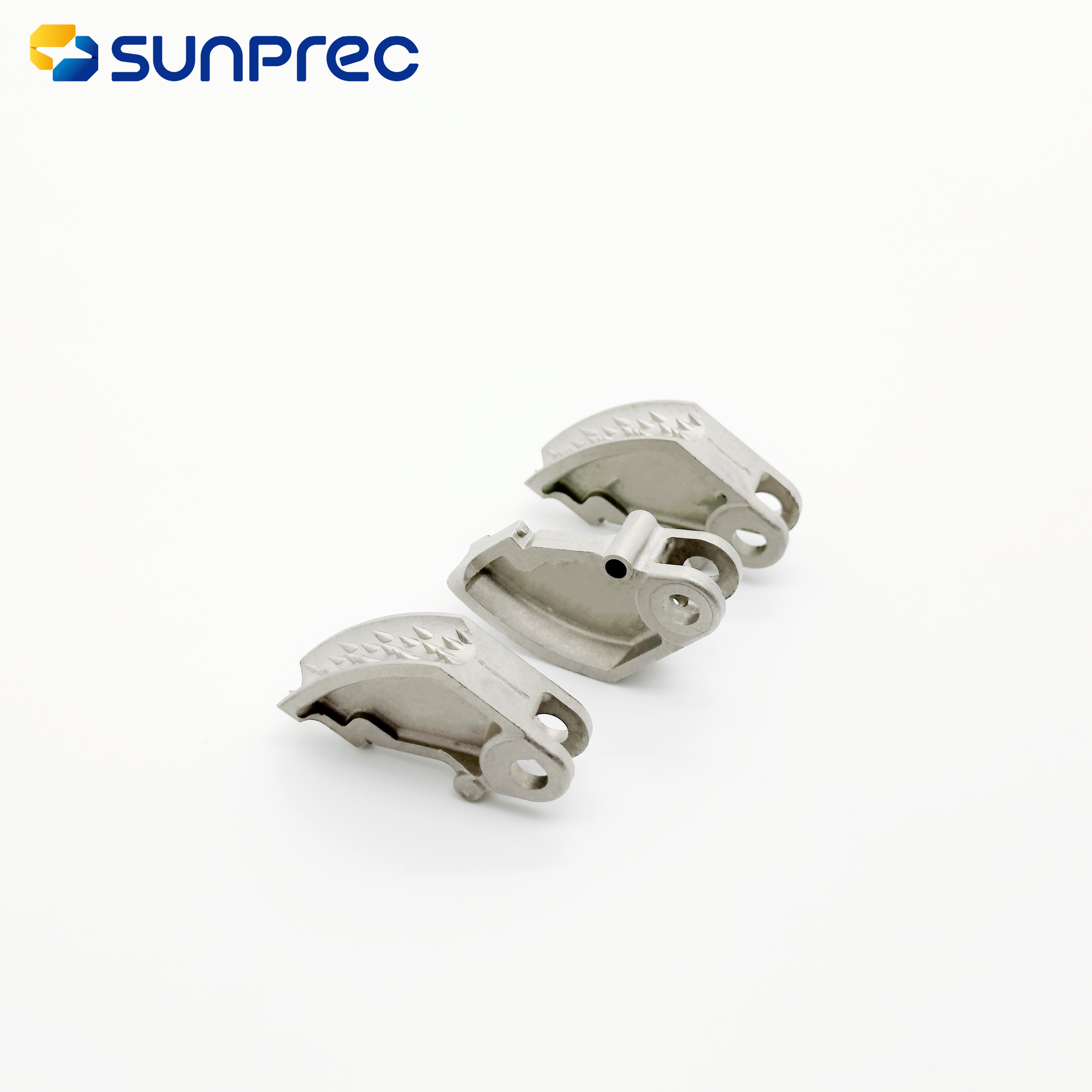
When engineers develop a complex metal component, the choice of manufacturing process has a direct effect on cost, dimensional accuracy, production efficiency, material usage, and final part performance. Two processes are considered again and again in that decision: investment casting and cnc machining. Both can deliver precision metal parts, but they work in fundamentally different ways. Investment casting builds a near-net-shape component through a wax pattern, a ceramic shell, and a casting cycle; CNC machining removes material from a solid workpiece with cutting tools under programmed control.
For buyers and design teams, the practical question is rarely "which process is better?" but investment casting vs CNC machining for this specific part. The answer depends on geometry, material, tolerance, production volume, surface finish, tooling, and whether critical features need secondary machining. This guide works through those factors in order, and explains why the two processes are often combined rather than treated as alternatives.
What Is Investment Casting?
Investment casting — also called lost-wax casting or precision casting — produces a metal component by pouring molten metal into a ceramic shell built around a disposable wax pattern. The pattern is coated with successive layers of ceramic, the wax is melted out, and molten metal fills the resulting cavity. After solidification, the shell is broken away and the part is cut from the gating system and finished.
The sequence is broadly consistent across foundries: pattern creation, wax assembly onto a tree, ceramic shell formation, wax removal, metal pouring, cooling and solidification, shell removal, cutting and finishing, and inspection. The value of the process is what that sequence makes possible. Investment casting can produce complex near-net-shape components with intricate geometries, thin walls, internal passages, fine surface detail, and multiple features integrated into a single casting — which can reduce the number of separate parts and the amount of machining required.
It would be a mistake, however, to describe investment casting as eliminating finishing work entirely. As-cast surfaces and dimensions have practical limits, and features requiring tight dimensional control are normally machined after casting. For a broader look, see this overview of investment casting and its role in producing complex components.
What Is CNC Machining?
CNC machining is a subtractive process: the final geometry is cut from a solid block, bar, or casting using computer-controlled cutting tools. A program derived from the CAD model drives the machine along the intended toolpaths, and material is removed until the part matches the design. The main operations are CNC milling, cnc turning, multi-axis machining (3-, 4-, and 5-axis), drilling, threading, and secondary operations on parts produced by other processes.
Its strengths are flexibility and control. CNC machining holds tight dimensional tolerances on the features a program can reach, accommodates design changes without new casting tooling, and suits prototypes and complex machined features such as pockets, precision holes, threads, and reference surfaces. It is equally comfortable working from billet or finishing a casting. A fuller explanation of the process is available in this guide to precision CNC machining, and the machinery involved is covered under CNC machining capabilities.
Investment Casting vs CNC Machining: Key Differences
The table below summarizes how the two processes differ across the factors that most influence sourcing decisions.
| Factor | Investment Casting | CNC Machining |
|---|---|---|
| Manufacturing principle | Near-net-shape casting | Subtractive machining |
| Tooling | Pattern and casting tooling required | Minimal dedicated tooling |
| Material usage | Generally efficient | More material removed as chips |
| Complex geometry | Excellent, including internal passages | Excellent, subject to machine access |
| Prototypes | Possible, tooling-dependent | Highly flexible |
| Low volume | Depends on tooling and geometry | Often attractive |
| High volume | Can be efficient for suitable parts | Can become machining-intensive |
| Design changes | More difficult after tooling | Relatively easy |
| Tight critical features | May require machining | Excellent control |
| Surface finish | Good as-cast finish | Depends on machining process |
| Secondary machining | Often limited to critical features | May be the primary process |
Three clarifications matter beyond the table. First, tooling defines the economics: casting amortizes pattern and shell tooling across the production quantity, while machining starts from standard stock. Second, geometry defines the physical fit: casting excels where the shape is hard to reach with a cutter, machining where the shape needs controlled accuracy on accessible surfaces. Third, the two are not mutually exclusive — a casting is routinely machined afterwards.
When Should You Choose Investment Casting?
Investment casting tends to be the better starting point when geometry is the dominant challenge. Typical drivers include highly complex external shapes, thin walls, internal passages, features that are difficult or impossible to machine, and designs that integrate several separate parts into one body. Where near-net-shape production reduces material that must be cut away, casting can also lower downstream machining time.
The process is well established in industries that combine complex geometry with demanding materials — aerospace, medical devices, automotive, industrial machinery, and oil and gas. It remains a strong option wherever suitable casting alloys exist and the design tolerates cast variation on non-critical features.
When Should You Choose CNC Machining?
CNC machining is usually the better starting point when dimensional control and design flexibility matter most. It suits prototypes, low-volume production, parts with frequent design changes, and components whose critical features are precision holes, threads, flat surfaces, pockets, or complex machined contours. Where the geometry is practical to cut from billet, machining avoids casting tooling altogether.
The flexibility advantage is strongest during product development: because the program is derived from the current CAD model, a design revision generally needs a program change rather than a new pattern or shell. Multi-axis capability extends the same control to angled and curved features that would otherwise need several setups; see how multi-axis machining expands design freedom, and for rotational parts, CNC turning.
Investment Casting vs CNC Machining for Complex Geometries
Complex geometry does not automatically favor casting, and it does not automatically favor machining. What matters is which kind of complexity the part contains.
Complex External Geometry
Integrated, organic, or sculpted external shapes are where investment casting is often most useful, because the shape is formed rather than cut. Where such shapes can also be reached by a cutter, machining becomes viable but may involve long cycle times and multiple setups.
Deep Pockets and Precision Machined Features
For pockets, machined bores, and features with tight positional or dimensional requirements, CNC machining offers better control — provided the cutter can reach the feature. This is the classic case for machining after casting.
Internal Passages
When internal channels cannot be machined — because a tool cannot reach them or the geometry curves out of reach — investment casting becomes advantageous, since the passage is created by the ceramic core rather than by a cutting tool.
Multiple Integrated Features
Where a design integrates several features into one body, casting can reduce part count and assembly steps. CNC machining can also produce integrated features, but consolidation may increase machining time and cost if each feature must be cut separately.
Tight-Tolerance Functional Surfaces
Functional surfaces — sealing faces, bearing seats, mating surfaces — usually benefit from machining even when the surrounding body is cast. Restricting tight tolerances to the dimensions that genuinely matter keeps the cost of that machining under control.
Investment Casting vs CNC Machining: Tolerance and Accuracy
It is too simple to say "CNC is more accurate." Investment casting can achieve good dimensional accuracy for a casting process, but it is subject to sources of variation that machining is not: pattern shrinkage, ceramic shell behavior, metal shrinkage during cooling, thermal variation, and general process variation. CNC machining, by contrast, can hold tighter control on the dimensions it is programmed to cut.
Even so, the tolerance a machined part achieves depends on machine capability, tooling, workholding, material, geometry, cutting parameters, inspection, and process control — not on a headline figure alone. The practical consequence is that a common strategy is to cast the overall geometry and machine only the features needing tighter control. Investment casting and CNC machining have different process capabilities and should not be compared on a single tolerance number.
Investment Casting vs CNC Machining: Surface Finish
As-cast surfaces from investment casting are generally good for a casting process and suit complex shapes, but specific requirements may call for additional finishing. Machined surfaces are more controllable: the achievable finish depends on tooling, cutting parameters, material, and strategy, letting an engineer set surface quality per face.
Where the as-produced surface is not sufficient, both cast and machined parts may pass through surface finishing — polishing, grinding, electropolishing, plating, coating, or another treatment — chosen for corrosion protection, wear, appearance, or function. For a wider view, see how surface finishing improves metal parts.
Material Selection for Investment Casting and CNC Machining
Both processes cover a broad material range, but suitability differs. Investment casting commonly works with stainless steel, carbon steel, low-alloy steel, aluminum, superalloys, and other suitable casting alloys — a range that suits components needing heat resistance, corrosion resistance, or strength in demanding environments. CNC machining works across aluminum, stainless steel, carbon steel, brass, copper, titanium, magnesium alloys, engineering plastics, and other engineering materials.
The selection logic is shared: strength, corrosion resistance, temperature capability, wear, weight, machinability, castability, and cost all participate. The constraint that separates the two is that a material must be practical to cast, and practical to cut. Consulting the manufacturer on material availability early avoids specifying a grade that is excellent for the application but impractical for the process.
Investment Casting vs CNC Machining for Prototypes and Production
Prototype
CNC machining often provides greater design flexibility at the prototype stage because changes are made in the program, not in tooling. Investment casting can also be used for prototypes — particularly where the geometry itself is difficult to machine, or where a cast prototype is needed to validate the casting process before production tooling is committed.
Small-Batch Production
The decision here balances tooling, part complexity, machining time, material cost, and quantity. Where tooling cannot be justified at low volume, machining is usually preferable; where the geometry demands casting, a cast route may still be viable even at modest quantities.
Medium-Volume Production
At this stage the calculation becomes explicit: tooling amortization, cycle time, machining requirements, scrap, and secondary operations should all be modeled. It is common for both routes to be quoted against the same part and volume before a decision is made.
High-Volume Production
Investment casting may become attractive for suitable complex parts at high volume, because near-net-shape production can reduce extensive machining. But casting does not automatically become cheaper as volume rises — the break-even depends on the part, the material, the machining remaining after casting, and the tooling investment.
Can Investment Casting and CNC Machining Be Used Together?
Yes — and for many complex components this is the most practical manufacturing strategy. The typical sequence is straightforward:
- Investment casting creates the near-net-shape component.
- Casting removes most of the bulk geometry and forms features that would be difficult to machine.
- CNC machining finishes critical dimensions that require tighter control.
- Drilling and threading create precision features.
- surface finishing completes the component.
- Final inspection verifies the part against the drawing.
Typical secondary machining features include precision holes, threads, bearing seats, mating surfaces, flat reference surfaces, and critical dimensional features. This hybrid approach combines the geometric flexibility of investment casting with the dimensional control of CNC machining — the same philosophy applies to other cast-then-machine combinations, such as die casting and investment casting.
How Production Volume Affects Process Selection
Prototype
CNC machining often provides flexibility and avoids tooling commitment.
Low Volume
The decision turns on geometry, machining time, tooling, and quantity — with machining usually favored unless geometry forces a casting route.
Medium Volume
Compare tooling amortization, cycle time, material efficiency, and secondary machining before deciding.
High Volume
Cost per part, tooling, production cycle, scrap, machining requirements, and inspection all need to be modeled explicitly. Volume changes the economics, but not the part's geometry — which is why geometry is usually the first filter and volume the second.
A Practical Decision Framework
For an unfamiliar part, the following three-way test is a useful starting point.
Choose Investment Casting When
- The geometry is highly complex or difficult to machine.
- Thin walls or internal passages are required.
- Near-net-shape production is valuable.
- Multiple features can be integrated into one casting.
- The selected alloy is suitable for casting.
Choose CNC Machining When
- Tight dimensional control is critical.
- Prototype or low-volume production is required.
- Design changes are frequent.
- The geometry is practical to machine.
- Precision holes, threads, pockets, or surfaces dominate the part.
Consider Both When
- The overall geometry is complex but some features demand tight tolerances.
- Near-net-shape casting can carry most of the form.
- Critical dimensions will be machined after casting.
- Secondary machining can improve functional accuracy at acceptable cost.
Questions to Ask Your Manufacturing Supplier
A supplier that can answer the following questions is a genuine process partner rather than a shop that only quotes the process it already runs:
- Which manufacturing process is most suitable for my part?
- Can you compare CNC machining and investment casting for my geometry?
- What materials are available for each route?
- What tolerances can realistically be achieved, and on which features?
- Which dimensions should be CNC machined after casting?
- At what production volume does each process become economical?
- What surface finishing options are available?
- Can you provide DFM feedback on the design?
- Can you handle both casting and secondary machining in-house?
- What inspection methods are available, and what documentation is provided?
Why Choose SUNPREC for Complex Metal Parts?
SUNPREC is a one-stop precision metal parts manufacturer. Its capabilities include CNC machining, CNC turning, investment casting, die casting, extrusion, and surface finishing, with support from prototype and small-batch runs through mass production, backed by documented manufacturing capability and quality inspection. Its site states that its investment casting capability covers stainless steel, carbon steel, superalloys, aluminum, and other suitable alloys, serving industries including aerospace, medical, industrial machinery, and automotive.
Because SUNPREC operates both casting and machining, it can evaluate the two together rather than as separate supply chains — which matters for the hybrid components described above. Documented equipment and quality capabilities include FANUC CNC equipment, 3-, 4-, and 5-axis machining, precision inspection equipment, and an ISO-certified quality management system. Where SUNPREC's site states a machine tolerance of approximately 0.005 mm for CNC machining centers, that figure describes machine tolerance / machine capability — not a guaranteed tolerance for every cast or machined part. Actual part tolerances depend on geometry, material, process, tooling, and inspection.
Conclusion
Investment casting and CNC machining solve different manufacturing challenges. Investment casting may be appropriate when complex geometry, thin walls, internal passages, near-net-shape production, and reduced machining requirements are important. CNC machining may be appropriate when tight tolerances, precision features, prototyping, low-volume production, and design flexibility are the priorities. For complex precision metal parts, combining both processes often provides the most practical solution: cast the form, machine the critical features, finish the surface, and inspect the result.
The right process should be selected from the complete part requirements — geometry, material, tolerance, finish, volume, tooling, machining content, and total cost — rather than a single factor such as price or one tolerance number.
Evaluating Investment Casting, CNC Machining, or Both?
Send SUNPREC your 2D drawing or 3D CAD file together with the material requirements, tolerances, surface finish, and estimated production volume. Our engineering team will review the requirements and help determine a suitable manufacturing process.
Request a Quote from SUNPREC →FAQ
1. What is the difference between investment casting and CNC machining?
Investment casting builds a near-net-shape part by pouring metal into a ceramic shell formed around a wax pattern; CNC machining cuts the geometry from solid stock with computer-controlled tools. Casting forms complex shapes efficiently, while machining delivers tighter dimensional control on the features it can reach.
2. Is investment casting more accurate than CNC machining?
They are not directly comparable. Investment casting achieves good accuracy for a casting process but is subject to pattern, shell, shrinkage, and thermal variation, while CNC machining holds tighter control on programmed dimensions. The practical answer is often to cast the body and machine the critical features.
3. Which process is better for complex metal parts?
It depends on the kind of complexity. Casting suits shapes and internal passages that are hard to machine; machining suits accessible features needing tight tolerance. Many complex parts are best produced by combining both.
4. Can CNC machining be performed after investment casting?
Yes. Secondary CNC machining after casting is a standard strategy for finishing precision holes, threads, bearing seats, and mating surfaces while the rest of the component is produced near-net-shape by casting.
5. Which process is more suitable for prototypes and low-volume production?
CNC machining is usually more suitable because it requires no casting tooling and handles design changes by reprogramming. Investment casting can also serve prototypes when the geometry itself is difficult to machine or when the casting route needs validation before production tooling.